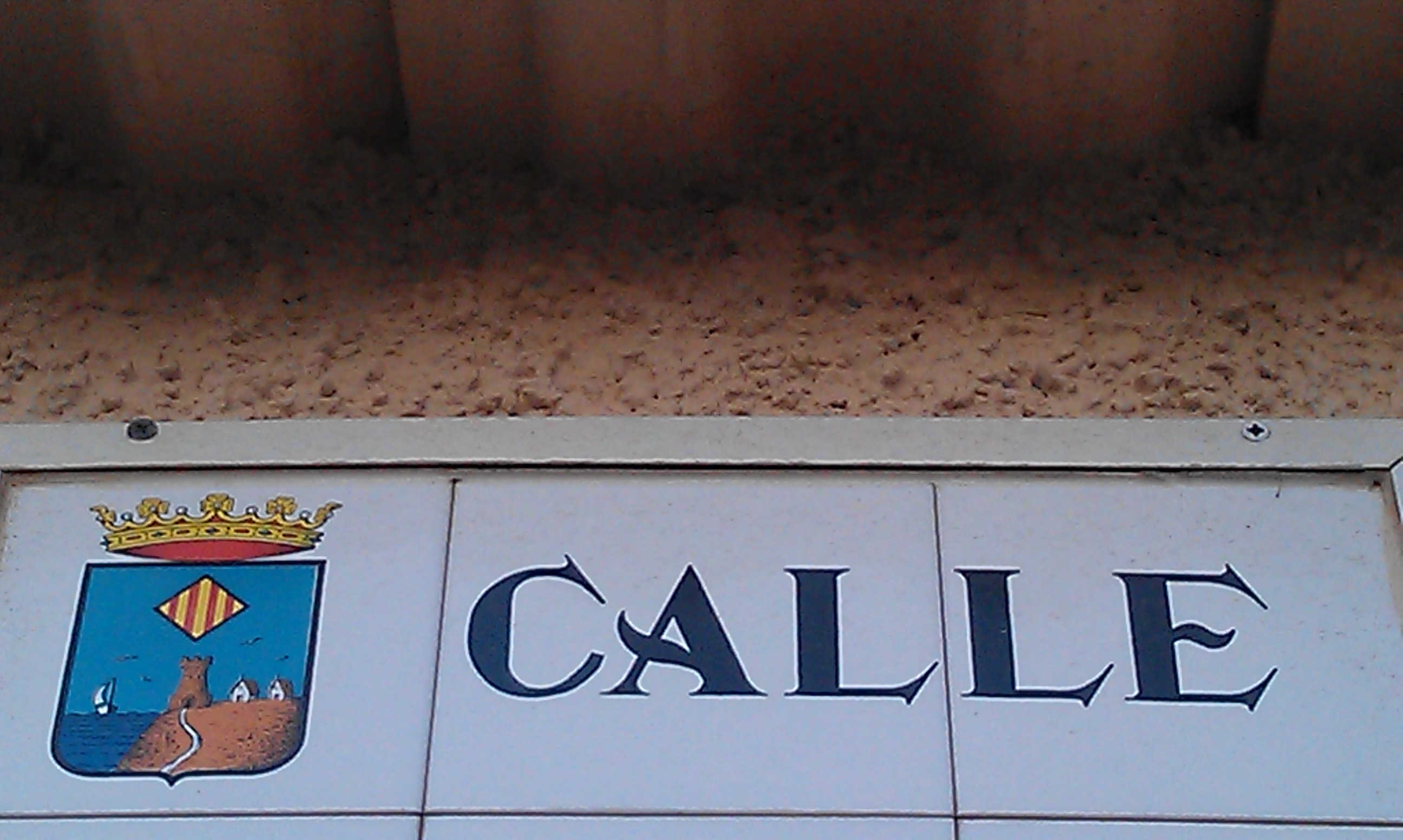
There are many places where the small terraces that make up the Calle have been individually improved. Some have added steps, some another floor, some roof gardens, some even extend into the lane itself. Continue reading “day 4”
There are many places where the small terraces that make up the Calle have been individually improved. Some have added steps, some another floor, some roof gardens, some even extend into the lane itself. Continue reading “day 4”
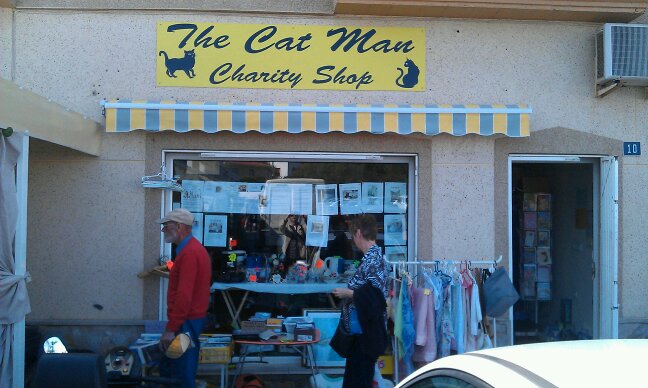
Down here in Spain, my father lives in La Siesta, a housing estate to the west of Torrevieja, and all around there is so much evidence of the British. My father has an appointment with someone and he drops me and his partner on the edge of a roundabout, a casual contravention of traffic laws that he would never permit back in the UK. We walk into a place called Quesada, through a brick build faux-town gate. It was open land until around 25 years ago when development began. There is a main street now with shops and bars lining it. I am taken to a bar at the far end of the street which is a Spanish bar I am told, that’s why my father likes to go there, at least there is a chance to speak Spanish, something that is not always easy for him to do, so many businesses being run by English speakers. I am amazed when I go in because I immediately notice that the back room of the bar is made up entirely of fruit machines, about twenty of them with some offering prize winnings up to 600 euros. There is also an electronic roulette wheel.
I work in the morning and at 11 we meet my aunt for a walk in the Parco Naturale, just a stones throw from the house. We pass many people walking and jogging, some on bikes and one man on horseback. All greetings are in Spanish: Ola, but who is Spanish is anyone’s guess. This is driven home the next day in a bar where I am convinced a man is an old local only to find him a life long Londoner there to read the paper. Similarly in a shop where I try to buy a sim card and old Spanish couple enter, looking for all life like an old fishing couple from the 1970s but they too are pensioners from the UK. The walk is lovely, through the garrigue and down to the lake side. There is little litter, one condom, a bit of dog shit. There are areas on the roadside where residents have tried to garden and escapes from these mini gardens appear here and there in the park. We walk for a couple of hours, past a few vineyards and a lot of bird rich scrub. When we do pass other people I feel that there is great hesitancy in actually speaking in case the same language is not encountered. Groups of people tend to go silent as they pass each other, not wishing to give away their identity, hiding behind a hard to decipher and eventually meaningless ‘Ola’. Continue reading “day 2”
At St Pancras I saw a young man pushing a machine around the station. I stopped and he was mapping the place for googlemaps. I asked him if I could photograph him, he couldn’t really say no but didn’t stay in the photo, he’s the one with his back to me. The machine had cameras at the top facing in all directions except down and towards the man operating it. An interesting presentation of reality isn’t it? A typical mapping process where the observer, the maker of the map, is removed from the image which arrives to be consumed as if there were no body operator, no agent, as if the map were an objective presentation of a place rather than a construction.

I’ve watched the two parts of a documentary seen on the BBC about a Baka family living in the Cameroon rainforest. The first part is really the original documentary made in the mid 1980s from a two year period spent filming with them. They were still living a forest life this family, hunting and gathering, living with limited contact with the outside world.
Recently the original filmaker (Phil Agland) returned to find the same family after 25 years. Significantly he didn’t give them two years this time, a few months I think. They welcome him back and he plays them the film of their parents and themselves as children. Gradually we learn of the loss of the skills of hunting and gathering, an invasive alcoholism, depredation of the forest through logging, mining and national park legislation.
It is an agonising journey but one which ended for me with a lot of concern about what the film maker had done and said. In a final scene, the main Baka man featured is seen washing his disabled daughter’s knees in water mixed with mud from his fathers grave. The scene is haunting. The soil is red.
The grave has come to life for the young man partly through his father’s virtual resurrection by the presence of the film crew. Yet we are treated to a voice-over that intones something like: “Is this what it has come to? Washing his daughters knees in the mud of his father’s grave?” It came across as condescending. as if there were more pathos than nobility.
I realise and respect the film makers desire to tell the world about the plight of the Baka but his voice-over denied an agency to that young man which is the expression of being Baka not its parody.
Definitely watch the two programmes though if you get the chance.
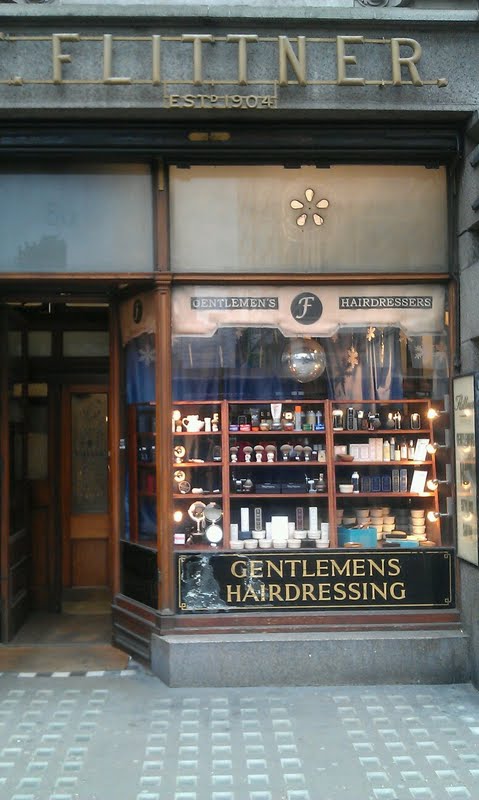
I stopped at Flittner’s Gentleman’s Barbers near Moorgate Station in London. I looked inside and they were doing wet shaves and I thought I’d treat myself.
At Trowell Services on the M1 we stop and cross the covered footbridge over the motorway.
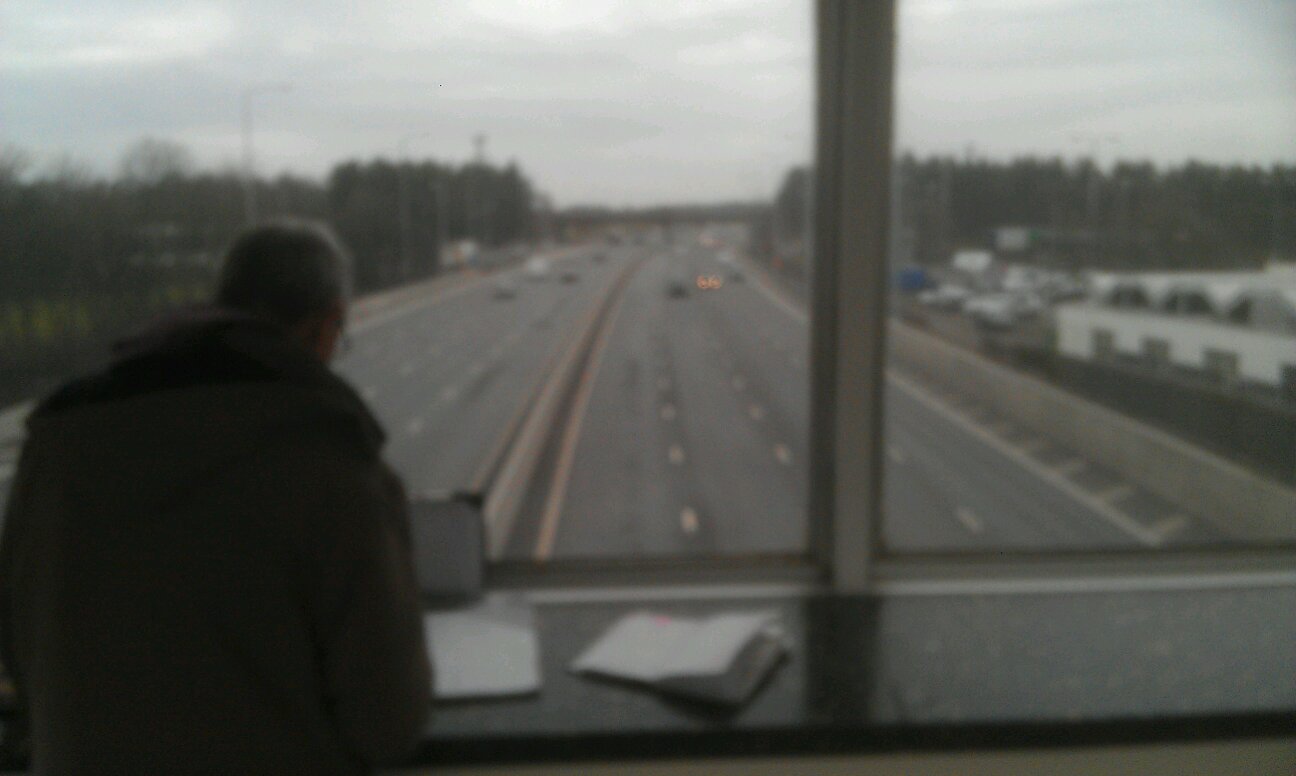
Norman Richards is standing there carrying a pair of binoculars and looking for lorries. Continue reading “trainspotting”
It befits me not to prate on Coriolanus,
one so ennobled of spirit that he doth transform me
beyond my citizenship by the simple mention of his name.
The Great Leader! What piffle. The man at the insistence of the people was,
the others to whom he needs must turn in foreign places banished,
such others as did ever rank beside him in childhood or in battle.
His voice a trumpet to those same their voice to find,
or be ever beaten, ever held in one or another subjugation.
The site Gallery: Sheffield
Visit One.
It is Saturday around 12.30 and I’ve left the Showroom with my two younger daughters in it. They are on a craft workshop before watching a film. I’ve gone to get a sandwich from the Site Gallery, just up the road and a bit better value for food I thought. Continue reading “being contrary”
A standard account of the events of ’68 in France might focus around the release of potential; there was no classic revolution but the emergence of a culture of self realisation, one with important ethical and political impact. These same events were criticised at the time and since as self-indulgent and a threat to social stability. Such commentaries were, largely, the terrain of the right. Today, whilst such a critique still exists in some senses, by and large the right has assimilated the major part of the ideas that might be identified as of ‘68 (leaving aside one: that it is a threat to social stability although this still functions as a good marketing device). Continue reading “’68 is a lovely name for a baby”